

Types of Hair Extensions: A Complete Guide for Beginners
Clip-ins, halos, tape ins, keratin bonds and more: how every type of hair extension works, how long it lasts and...
read more


Halo hair extensions have become one of the most popular ways to add length and volume, and it is easy to see why. There are no clips digging into your scalp, no glue, no tape and no salon appointment. You place a thin wire on your head, pull your own hair over it, and in about a minute you have long, full hair.
But halos are not perfect for everyone. This guide explains what halo hair extensions are, how they work, their honest pros and cons, who they suit best and how to choose and care for one.
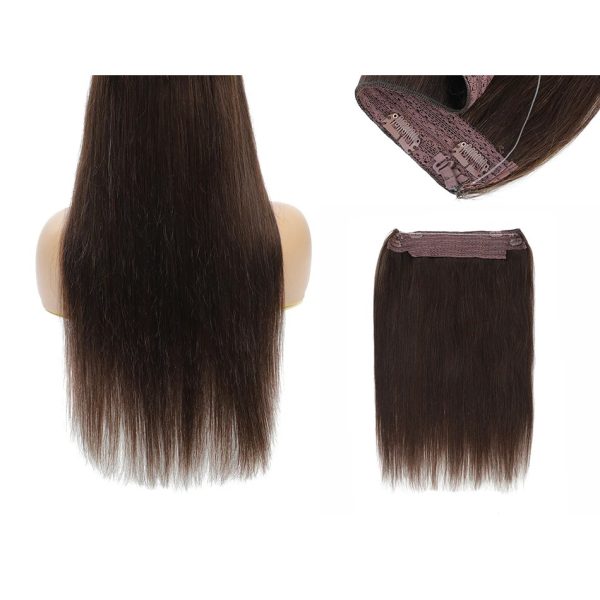
A halo is a single wide weft of hair attached to a thin, clear wire, often called a fish line or invisible wire. The wire forms a loop that sits around the crown of your head, a little like a headband worn further back. Your own hair is pulled over the wire at the top so it is completely hidden, while the halo hair falls underneath your own and adds length and fullness all around.
You may also see halos called wire hair extensions, invisible hair extensions, headband hair extensions or crown hair extensions. They all describe the same idea.

With a little practice, the whole process takes about one minute.
If you mostly wear updos or very high ponytails, or your hair is very short, clip-in hair extensions or a ponytail extension may suit you better. We compare them in halo vs clip-in hair extensions.
The classic style, with no clips at all. The lightest and most comfortable option.
Two to five small clips at the sides or back add security for windy days, long events or silky hair.
An adjustable wire lets you change the loop size so the halo sits at exactly the right height. Helpful if a fixed wire feels tight or loose.
Human hair halos can be curled, straightened and washed like your own hair. Synthetic halos are lighter, more affordable and keep their waves without styling. Compare the two in human hair vs synthetic hair extensions.
Most halos are between 16 and 24 inches. Choose a length at least 4 inches longer than your own hair for a smooth blend. Shoulder length hair suits 18 to 20 inches, while longer hair can go up to 22 or 24 inches. Our hair extension lengths guide has more detail.
Halos usually weigh less than full clip-in sets. Around 100 grams gives natural volume; more gives a fuller look.
Match your natural texture or the way you usually style your hair. Wavy halos are very forgiving because waves hide the point where your hair meets the halo.
Match the shade to the ends of your hair in daylight. Balayage and ombre halos suit hair that is darker at the root. See how to match hair extensions to your hair colour.
Halos are one of the most comfortable extensions for warm weather because there are no clips holding heat against your scalp and the single weft sits away from your roots. A few tips make them even better in summer:
More climate tips are in our guide to hair extensions in the UAE heat and humidity.
If your main concern is thin hair on top, at the crown or along your parting rather than length, a hair topper may be a better choice than a halo. A topper clips onto the top of the head to add volume exactly where it is needed, while a halo adds length and fullness underneath. Some women wear both together. Read hair toppers for thinning hair on top to compare.
For a full routine, see our hair extension aftercare guide.
No. The wire rests on your crown and your own hair holds it in place. For extra security, choose a halo with small clips.
Not when your own hair is pulled over it properly. Check the sides in a mirror after putting it on.
Shoulder length hair works best. Shorter hair may struggle to cover the wire; a halo with clips and a shorter length can help.
Not usually. If it feels tight, it is sitting too far forward. Move it back or choose an adjustable wire.
Yes. It adds length and volume at the back under your underscarf. See wearing hair extensions with a hijab.
Human hair halos often last around a year or more with care; synthetic halos last a few months of regular wear.
Discover straight, wavy and curly styles in our halo hair extensions collection, with Cash on Delivery and free UAE delivery on orders over AED 200.